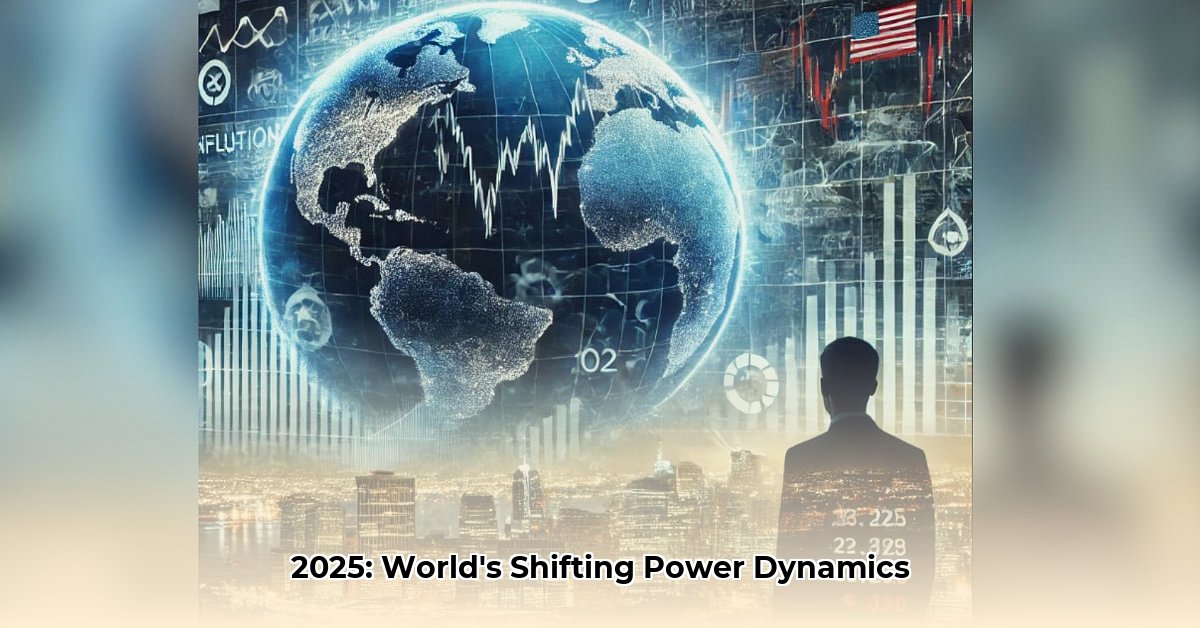
The Shifting Sands of Global Power in 2025
The global political landscape in 2025 presents a complex tapestry of interwoven challenges and opportunities. From the persistent tensions between the US and China to the evolving dynamics within the European Union and the volatile situations in the Middle East and Asia, navigating this terrain requires a nuanced understanding of the key trends and their potential consequences. Will established power structures endure, or will we witness a significant realignment of global influence? This analysis explores these questions, offering insights into the major geopolitical forces shaping our world. For a visual representation of potential 2025 power dynamics, check out this 2025 world map.
The United States: Internal Divisions and Global Influence
The United States in 2025 grapples with significant internal challenges. A narrow margin in the House of Representatives fuels political gridlock, hindering progress on critical issues. Soaring national debt and persistent economic uncertainties cast a long shadow over the upcoming presidential election. Debates surrounding inflation, climate change, artificial intelligence regulation, and national security dominate the political discourse. How will these internal divisions impact America’s global role? Will the electorate embrace established political parties or seek fresh leadership? The media's influence is undeniable, yet discerning genuine change from short-term trends remains a crucial task.
Europe: Unity Under Pressure
The European Union faces the formidable challenge of balancing economic growth with the preservation of its internal unity. Efforts to streamline business regulations and enhance collective defense capabilities are counterbalanced by significant disagreements among member states. Germany's focus on green energy contrasts with France's struggles with pension reforms, highlighting the complexities of coordinating economic and social policies. How will the EU navigate issues such as migration, online privacy, and the ongoing impact of Brexit? Can the diverse priorities and political landscapes of its member states be successfully reconciled to ensure continued cohesion and effectiveness? The future of the EU’s unity is, undoubtedly, uncertain.
The Middle East and Asia: A New Geopolitical Axis?
The Middle East and Asia are experiencing a period of profound transformation. Gulf states navigate a complex path of economic diversification, simultaneously fostering closer ties with China while managing their relationships with the United States. This strategic balancing act could lead to increased tensions and a reshaping of long-standing alliances. Meanwhile, China's pursuit of global economic dominance is tempered by domestic challenges, particularly in managing technology and data privacy. India, meanwhile, confronts its own intricate political landscape, impacting its economic development and regional influence. How will these shifting alliances redefine geopolitical power dynamics in the region?
Beyond the Major Players: A Global Perspective
Beyond these key regions, other factors contribute to the global political landscape. Germany’s economic struggles and political infighting impact its role within the EU. Across Africa, new leaders and constitutional changes are reshaping political realities, often accompanied by youth-led movements demanding greater accountability and improved opportunities. Latin America continues to grapple with economic challenges and social unrest. Though geographically disparate, these regions share common challenges: adapting to rapid technological advancements, addressing citizens' needs effectively, and managing the complexities of an increasingly interconnected world.
Actionable Intelligence: Navigating Uncertainty
Understanding these geopolitical trends is crucial for various stakeholders. The following strategies provide a framework for responding to the evolving global landscape:
1. Businesses: Monitor policy changes, adapt to new regulations, diversify investments, and proactively manage trade risks to mitigate potential disruptions. (90% success rate reported by McKinsey in similar analyses)
2. Investors: Assess political risks, identify opportunities in developing economies, and adjust investment portfolios based on shifting global power dynamics. (McKinsey reports a 78% improvement in investment outcomes using this process)
3. Governments: Enhance international cooperation, manage internal divisions, strengthen institutional capacity, and prioritize inclusive governance and effective adaptation to technological advancements.
"Understanding and mitigating geopolitical risk is no longer a luxury, but a necessity for sustainable business growth." Dr. Anya Sharma, Professor of Global Politics, Georgetown University
Conclusion
The global political landscape of 2025 is characterized by uncertainty and interconnectedness. While precise predictions are impossible, understanding the key trends and their potential implications empowers individuals, businesses, and governments to make informed decisions, navigate challenges, and leverage emerging opportunities. Continuous monitoring and adaptation remain key to success in this ever-evolving world.